Space Race of the 1960s, when astronauts and aviators were national heroes, and hearing about it was a big part of my childhood.
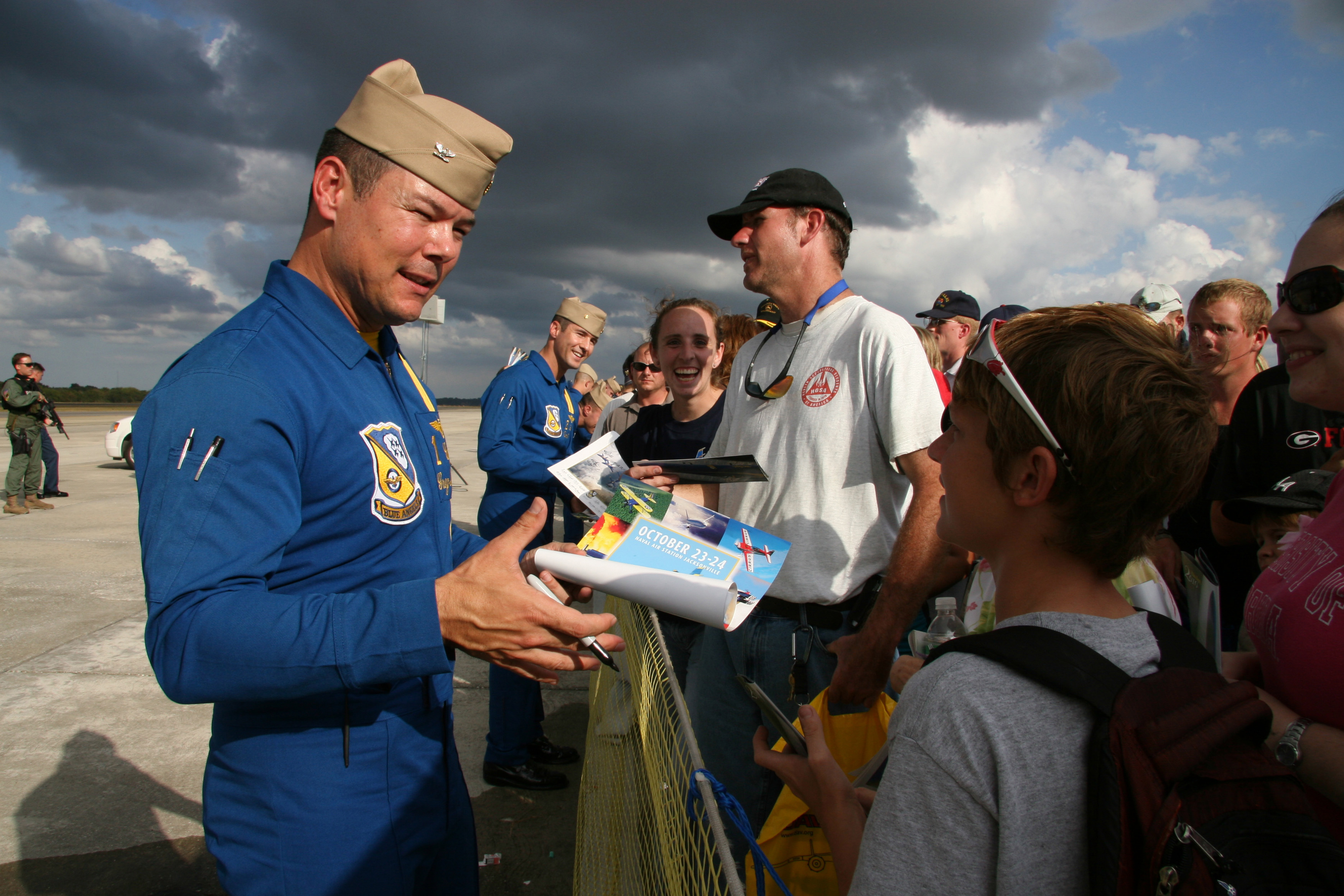
He was also loved to see the Air Force’s acrobatics squadron, and naturally father-son rivalry meant I sided with their rivals, the Navy’s Blue Angels.
So when I read last week that their former commander, Greg McWherter, is facing allegations that he allowed sexual misconduct and harassment while leading the Blue Angels, I was disappointed but not very surprised.
I should note that there are a number of Blue Angels, including the only female member, who defend him and that the investigation is ongoing. But at the same time the Navy viewed it as serious enough to relieve him of his current position, and given the ongoing epidemic of sexual misconduct in the American military, it’d be naïve to think any unit would be exonerated — even my favorite.
It’s a sad irony that McWherter was also president of the Tailhook Association until April 25, when he resigned to avoid being distracted from his duties by the inquiry.
At the Tailhook Association’s 1991 convention in Las Vegas, several dozen women were forced to run down a crowded hallway of male pilots, who groped them at will.
Without the scandal, which the Washington Post said may be the worst in the Navy’s history, it’s questionable that this incident or the fact that over 25,000 members of our armed services were targets of sexual assault and misconduct in 2012, according to the Pentagon, would have made national news.
At the Tailhook convention, the top brass said there was no tolerance for sexual assault in the military. It’s the same thing they’ve been saying over the past year, as renewed attention and Congressional inquiries bring the spotlight back onto sexual assault in the military.
Last June, I wrote a column on the two plans being introduced to combat military sexual assault. It’s May now, and Congress is still debating. Worse, the general consensus is in favor of the weaker plan, which leaves disciplinary authority to military personnel, a system that has failed time and time again.
It’s not all bad, though. A number of laws and government efforts are being introduced to reduce sexual assault in general. The most prominent is focused on us — college students.
Throughout the past year, university after university has come under fire and even federal investigation for mishandling and misreporting sexual assaults that occur on and around their campus.
These include op academic schools like Yale and Dartmouth and athletic powerhouses like Florida State University, where Heisman Trophy winner Jameis Winston was accused of sexual assault.
Local police cleared Winston, but an April 16 New York Times report found many irregularities in their handling of the case, and noted that the investigating officer has also worked for a nonprofit booster organization that’s the lead donor for Florida State athletics.
Thankfully, I can say that from my professional experience, there are effective means to promote reporting of sexual assaults to authorities in Delaware. I’ve spent the better part of the semester researching statistics on sexual assault in Delaware from 2000 to 2012, and while numbers of reports were over three times the national average, interviews with academics, activists, advocates and police attributed this to the positive efforts of the Delaware Sexual Assault Response Team.
As professor and criminologist John Durst noted, though, from a survivor’s perspective any number is too high.
Having seen the reports, even in more aggregated forms, I have seen that there are truly haunting stories within them, but the stories are not mine to share.
Even with such great reporting structures, we may never be able to end sexual violence entirely, but we should never stop fighting.