
Ideas, insight and imagination in three minutes

Photo courtesy of Olivia Lease.

Sara Hollabaugh, Arts &Entertainment Editor

If lectures were only three minutes, would phones be checked or the internet surfed?

Ohio Wesleyan will hold a three-minute lecture series event on Feb. 3 called I³ (I-cubed), which stands for ideas, insight and imagination.

At the event, 10 professors will give lectures for three minutes each.

The idea for I³ was developed by OWU’s communications office.

Will Kopp, chief communications officer, said there was a branding initiative to create a new event to market what OWU has to offer.

“We have the OWU Connection and [we were seeking] how to display that.”

Kopp added one-third of OWU students have double majors with interests across the academic spectrum.

“They are not always things that may seem to go together,” Kopp said. “It might be physics and art, but there’s a wide variety.”

The communications office considered student interests and what was most important about OWU in order to decide what really defines the campus.
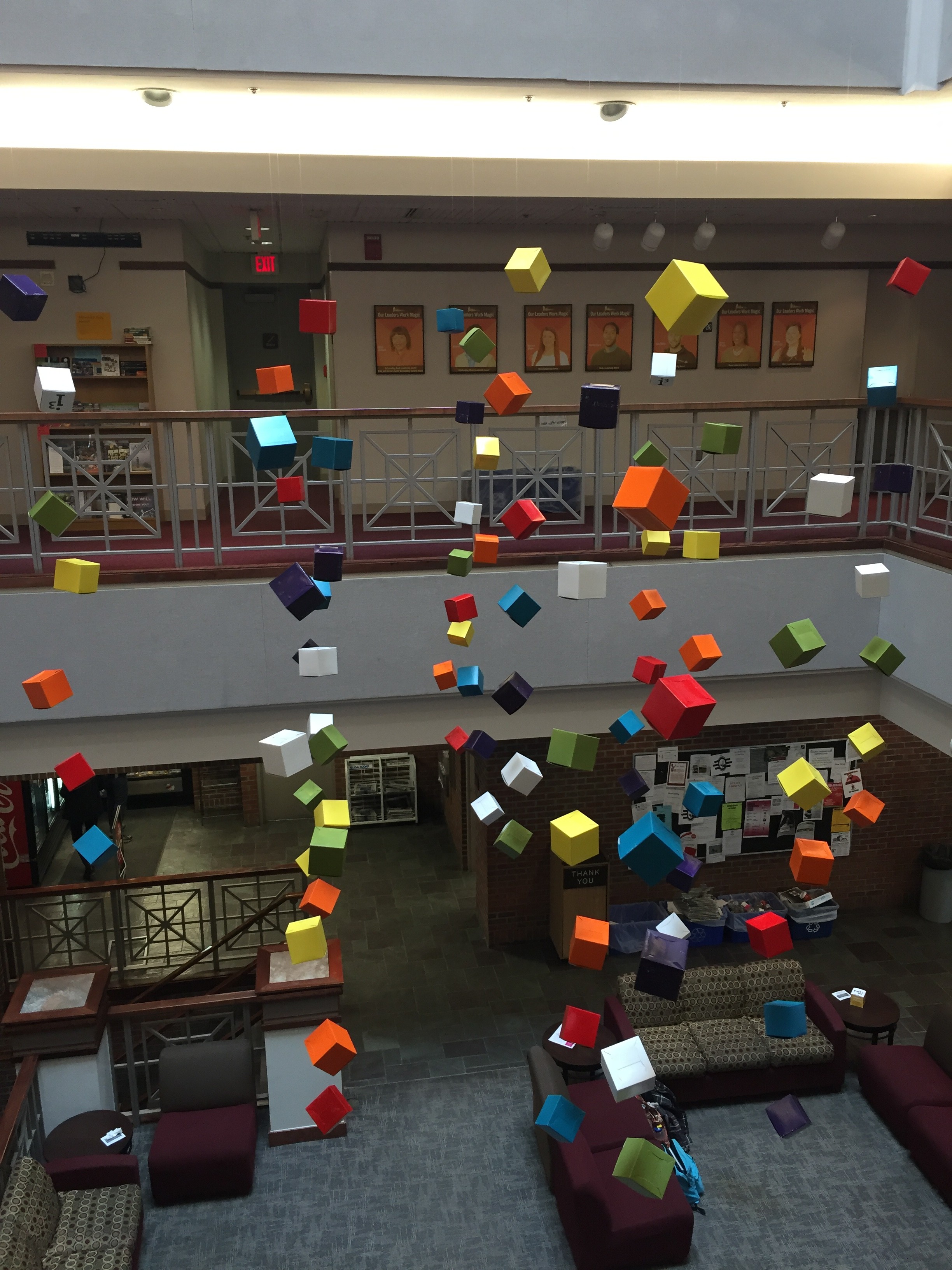
Cubes hang in the Hamilton-Williams Campus Center to advertise the series. Photo courtesy of Sara Hollabaugh.

The office decided it was great teaching.

Kopp said the event then came all together and they searched for 10 of the student’s favorite faculty members.

“We have several students working in the communications office and had them survey students,” Kopp said. “Narrowing down to just 10 was difficult, [but] every single professor said yes.”

“If we keep it the length of a pop song and really interesting, I think [people] will watch them all,” Kopp said. “[Three minutes] really makes you focus.”

Kopp added that each topic needs to be interesting because even though each lecture is three minutes, the whole series will last 30 minutes.

According to the event’s online description, the lectures “will exemplify the power of combining the traditional liberal arts with practical experience, which is the hallmark of the OWU Connection.”

“Each person has to walk out of there learning something,” Kopp said. “[The faculty] must teach the audience something new. This event is strictly ours, unique to OWU. I hope it could become a tradition here.”

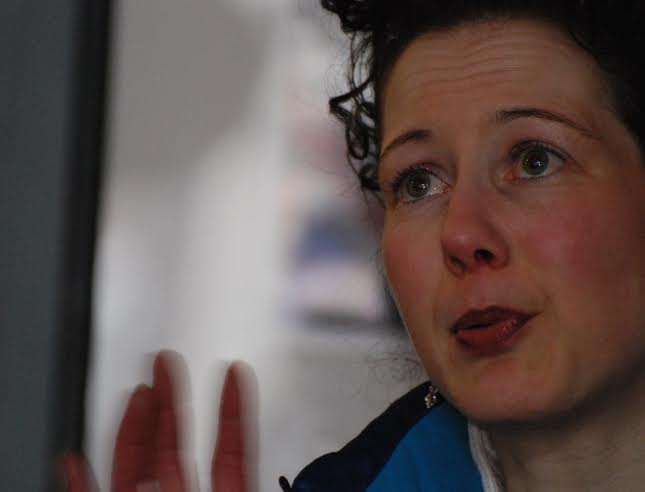
Melanie Henderson, assistant professor of psychology, is giving her lecture on interviewing.

“The title of my presentation is ‘Interviewing 101: Who is That Chameleon in the Mirror?’” Henderson said. “I will present research findings on the topic of “mirroring,” a process relevant to the psychology of interviewing and the role of self-presentation in interview outcomes.”

“My objective is to provide students in the audience with a simple insight on the interviewing process and a strategy for applying this knowledge to future interview experiences,” Henderson said.

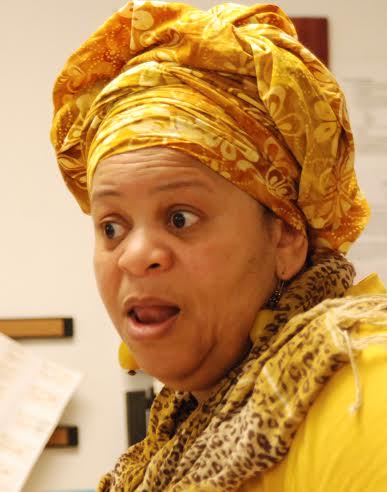
Jennifer Jolley, assistant professor of music, will be teaching a music lecture.

Jolley admitted that her lecture will be a challenge because the audience will need time to hear the music.

“In other creative fields, time is not fixed (the amount of time it takes to look at a piece of art or read a short story varies),” Jolley said. “But in my field, you cannot speed-listen to a piece of music.”

“My lecture will have to include ridiculously short excerpts of music, but hopefully that will inspire my audience to listen to the featured works when the event is over,” Jolley added.

Other professors selected to participate in the lectures are Sally Livingston, Jenny Holland, Bob Harmon, David Eastman, Paul Dean, Laurie Anderson, Zack Long and Goran Skosples.

For more information, visit here.
WCSA debates democracy

Photo courtesy of the OWU website.

Areena Arora, Managing Editor

Democracy was debated by members of the Wesleyan Council of Student Affairs (WCSA) at its Jan. 25 meeting. How senators are appointed and who gets the right to vote was at issue.

A resolution to appoint new members was proposed through the Administrative Policy Committee, and was opposed by Senator Phub Dorji who questioned the process used to decide which candidates received voting rights.

WCSA President Jess Choate said there were five equally qualified applicants for two open positions and the executive committee made a decision after a long discussion.

“We appointed three students as members at large because we only had two vacant positions and we did not want to disregard the other three voices,” said Choate.

Dorji responded, “If all five candidates were equally qualified, wouldn’t it be better if full senate decided on who gets voting power and who gets to be a member at large?”

Dorji said, “The Executive has great powers, but their combined powers must always be smaller than that of the Legislative – if they appoint Senators like they did, then they can fill the Legislative with their friends who will vote along their lines.…If we want to call ourselves a democratic establishment, we need to start taking democracy seriously.”

Dorji also asked if it would’ve been better to have the applicants come to the meeting and talk to the full senate.

However, since all the applicants were not present at the time, Choate suggested it would be unfair to others and acknowledged Dorji’s concerns.

WCSA Vice President Sam Schurer said, “(The discussion) left me more excited than ever to move forward with improvements to WCSA’s internal workings that Jess (Choate) and I see as crucial to a successful term.”

Choate said, “At this point, we did what our current constitution requires us to do, but we will be working to create a more inclusive appointment process in the future.”

According to the WCSA constitution, “The Executive Committee shall appoint, with the consent of WCSA, at large representatives for the purpose of ensuring appropriate constituent balance on WCSA.”

However, according to WCSA’s Standing and Sessional Orders of the Council, adopted in April 2014, members at large do in fact occupy a voting seat. The Executive Committee may also appoint one member at large, with rights to attend its meetings but no voting rights.

Freshman Katie Kuckelheim, who was appointed as a member at large with no voting rights, said, “Being a member at large gives me a chance to learn what WCSA does….before I make my vote count. I feel it’s better that I do not have voting rights as of now so I can get to know WCSA better, and then I will be able to have a more informed choice.”

Kuckelheim added that when a spot for senator opens, she will be the first to apply.

Senator Ryan Bishop, while agreeing with Dorji’s concerns, expressed satisfaction with Choate and Schurer’s approach to the situation.

Bishop said, “Sam (Schurer) clarified that this is coming out of the constitution and they (Choate and Schurer) agreed that in future we should try restructuring the election processes, but it really made a great impression on me that [Schurer] took out the time to explain exec’s (Executive Committee) position.”

Choate said, “We contacted Senator Dorji and other senators who were raising      concerns and are hoping to continue the conversation with them. Our Administrative Policy Committee has already begun to incorporate the concerns raised in Monday’s full senate into their ongoing efforts to improve our organization.”

Schurer said, “Those are the kinds of conversations that Jess (Choate) and I have been trying to get started since we decided to run. It is awesome to see someone with so much passion for WCSA and we think it is a really good sign.

Full senate also voted to appoint senator senior Andrew Stock the sergeant of arms and voted to adopt a resolution to change the names of the Residential Affairs Committee to      Student Life Committee and the Campus Relations Committee to Public Relations Committee.

Two budget requests also were passed at the meeting.

Mixed results for OWU’s basketball teams

Leia Miza, Transcript Reporter

A bittersweet note was left at Branch Rickey Stadium on Jan. 24  as Ohio Wesleyan University’s women’s team was defeated and the men’s team triumphed over Denison University.

The women’s team went first against Denison and kept the score close throughout.

By the end of the game, the team faced challenges, which resulted in a loss.

“I was pleased with our rebounding effort in the first half, but they just wore us down in the fourth quarter,” said Stacey Lobdell, coach of the women’s team at OWU.

Rylie Pittard, a freshman on the women’s team, said, “throughout the game it was pretty even for both teams, we would score and then they would counter it.”

The players forced 21 turnovers and 13 steals, but the defensive effort still resulted in a 58-42 loss for the Battling Bishops.

The Ohio Wesleyan men's basketball team beat Denison, 82-76, this past Saturday. Photo courtesy of Sara Blake.
The Ohio Wesleyan men’s basketball team beat Denison, 82-76, this past Saturday. Photo courtesy of Sara Blake.

Immediately after the women clashed, the OWU men’s basketball team came onto the court and began warming up. The stands filled with more fans and foot-stomping and chanting filled the stadium.

The scores between both teams remained close throughout the first half. But near the end of the game, there was a major turning point.

“The team went down by seven points with five minutes left in the game and we went on scoring run, took the lead and won the game,” said senior team captain Claude Gray.

This was a good test for the team as it gave it a chance to “show we have heart,” Gray said.

“I was just glad me and the team could pull together and do the things needed to be done to win the game. I’m looking forward to seeing the team keep improving.”

Orange is the New Black author visits OWU


Orange is the New Black author Piper Kerman. Photo courtesy of the Huffington Post website

Ela Mazumdar, Transcript Reporter

Piper Kerman, author of Orange is The New Black, visited Ohio Wesleyan University on Jan. 20 to talk about the issue of mass incarceration.

Kerman came to speak at OWU’s Gray Chapel, sponsored by the Delaware County District Library.

The room was quickly flooded with Ohio Wesleyan students, faculty and staff and a large number of Delaware residents, eager to hear about time in prison from someone with firsthand experience.

Kerman introduced herself and her experiences in a comedic yet relatable manner, providing ease to the audience.

She then talked about meeting her significant other at a brewery, which led her into the prison system.

“Rather than run in the other direction as common sense might have suggested, I instead followed her around the globe,” Kerman said.

She discussed in detail her fears when she ended up helping her significant other travel with drug money.

“She was scared. I could tell she was scared and I was scared, too, so I did it. I carried that bag of money. I had crossed a line I couldn’t uncross.”

Kerman continued with her story, saying that eventually “our consequences catch up with us.”

She then did a statistical walk-through about U.S. incarceration and layered these facts with her initial experience in the prison in terms of surroundings, clothing and the other inmates she encountered.

Photo courtesy of amazon.com.

“The last thing I expected to experience in prison was kindness at the hands of the other prisoners, yet that was exactly what I experienced,” Kerman said.

She went on to talk about Star, a woman in her dorm who had made her a name tag as a welcome, which was a powerful signal that gave a Kerman a sense of community.

After these personal anecdotes, Kerman discussed the impact of incarceration on people in terms of losing a parent and mental health.  She also told everyone the meaning behind her novel and the reason she wrote it.

Bob Gitter, professor of economics at OWU, said Piper Kerman did an excellent job of making the case that we do indeed put too many people in prison in the U.S.  In terms of cost, families and recidivism, she shows that locking up non-violent criminals is not the way to go.

“I hoped that by talking about what I experienced, people would get a better understanding of who was in prison and why they were there and what goes on behind prison walls,” Kerman said.

She ended with her favorite scene from her Netflix series and ended with questions from the audience and a book signing where fans could get up close and personal.

Freshman Natalie Campbell, an attendee at the event, said, “I thought the event was eye-opening about the problems within the U.S. prison system. It was interesting to hear Kerman’s plan of action to help reduce the amount of people, especially women, who are incarcerated every year.”

OWU track team sweeps triangle meet

Freshman Kevin Jones receives a baton from junior Colin McShane (pic- tured left). Photo by Leia Mizas.

Ross Hickenbottom, Sports Editor
Friday night was a successful one for the Ohio Wesleyan indoor track teams as they swept the OWU Triangular meet, where they hosted Mount Vernon Nazarene and Muskingum University.  

The men’s track team, led by senior Adam Turner’s first place finishes in both the 300-meter dash and the 500-meter run, dominated the meet with their 180.5 points as compared to Mount Vernon Nazarene’s 84.5 and Muskingum’s 66.

A long list of first place finishers for the men include sophomore Nate Newman in the high jump, senior Aaron Port in the shot-put, junior Colin McShane in the 60-meter dash, senior Houston Smith in the 800-meter run, sophomore Nick Horton in the mile run, senior Nathan Madonich in the 3000-meter run, freshman Quentin Broomfield in the 60-meter hurdles, sophomore Westin Short in the pole vault and senior Ahmed Abdel Halim in the triple jump.

Sophomores Nate Newman and Griffin Peyton as well as freshman Tommy Davis all feel as if the meet went as planned, if not better.

“We really exceeded expectations,” said Newman, a multi-event athlete.

As for the women’s team, the results are just as dominant as their male teammates.

Led by senior Sarah Alflen’s two gold medals in the shot put and the weight throw, the ladies took the meet with their 176 points, compared to 109 for Muskingum and a mere 26 for Mount Vernon Nazarene.

Another long list of gold medalists contributes to the team success, consisting of sophomore Emily Brown in the triple jump, sophomore Amanda Clay in the 60-meter dash, senior Sara Johnson in the 60-meter hurdles, sophomore Rachell Resnik in the mile run, senior Abbey Warth in the 800-meter run, freshman Alyssa Acevedo in the long jump, sophomore Nicole Rozsa in the pole vault and JaMilla Holland who won the 200-meter dash.

Meg Teitelman, a sophomore multi-event athlete, contributed the “great team win” to the freshmen stepping up to their calling.  In specific, Alyssa Acevedo, who took gold in the long jump, as well as finishing second in both the 60-meter dash and the 60-meter hurdles.

Acevedo said the team was expected to “destroy them, and that’s what we did.”

Both teams look to continue their dominance in their upcoming NCAC Quad at the College of Wooster on Saturday the 23rd.

Artist prepares for the opening of her first solo show


Photo courtesy of Facebook.

Leia Miza, Transcript Reporter
“She really exemplifies what the bachelor of fine arts program in the fine arts department should be – an intensive path for building knowledge and skills across many art disciplines,” said Frank Hobbs, a fine arts professor at Ohio Wesleyan University.

Catie Beach is a senior at OWU from Columbus, Ohio, pursuing a B.F.A degree. She currently lives in the Sexual and Gender Equality House (S.A.G.E) and maintains active membership in  the Student Led Art Movement (SLAM) club. She is preparing for the opening of her first solo show, which will be up by the end of the month.

Although Beach’s concentrations consist of painting and printmaking, her potential has not been limited to just that. “The biggest surprise interest was going into sculpture. I’m very interested in the physicality of it. It stimulates you beyond your hands and arms; it’s your whole body.

Her upcoming show will display a range of mediums. “It’s going to have a lot of my sculpture work, printmaking, painting and maybe some drawing work as well as ceramics. It is still to be curated,” she said.

Screen Shot 2016-01-25 at 5.14.20 PM
Beach and another student learned how to pour hot iron during a class in spring 2015. Photo courtesy of Facebook.

The art exhibit will cover a “retrospective” of the work she has done over the course of her time at OWU. She explained how many of the pieces are related to personal bounds such as family as well as other thematic explorations she has pursued.

“I’ve always been interested in nature and  themes of death and how there is deception in the beauty of it. Often times, beautiful anomalies are products of destruction. A lot of my works are another focus on that,” she said.

Jordana McCallen, a fellow senior fine arts student at OWU, got the chills when she spoke about Beach. “I respect Catie so much as an artist. First of all, she has an innate talent that is really rare. I respect that she aware of that talent but is still humble. I just want more people to see her work.”

The opening will take place at the Werner Student Art Gallery of Edgar Hall on Jan. 29 from 6 to 8 p.m.


Extreme home makeover: SLU edition

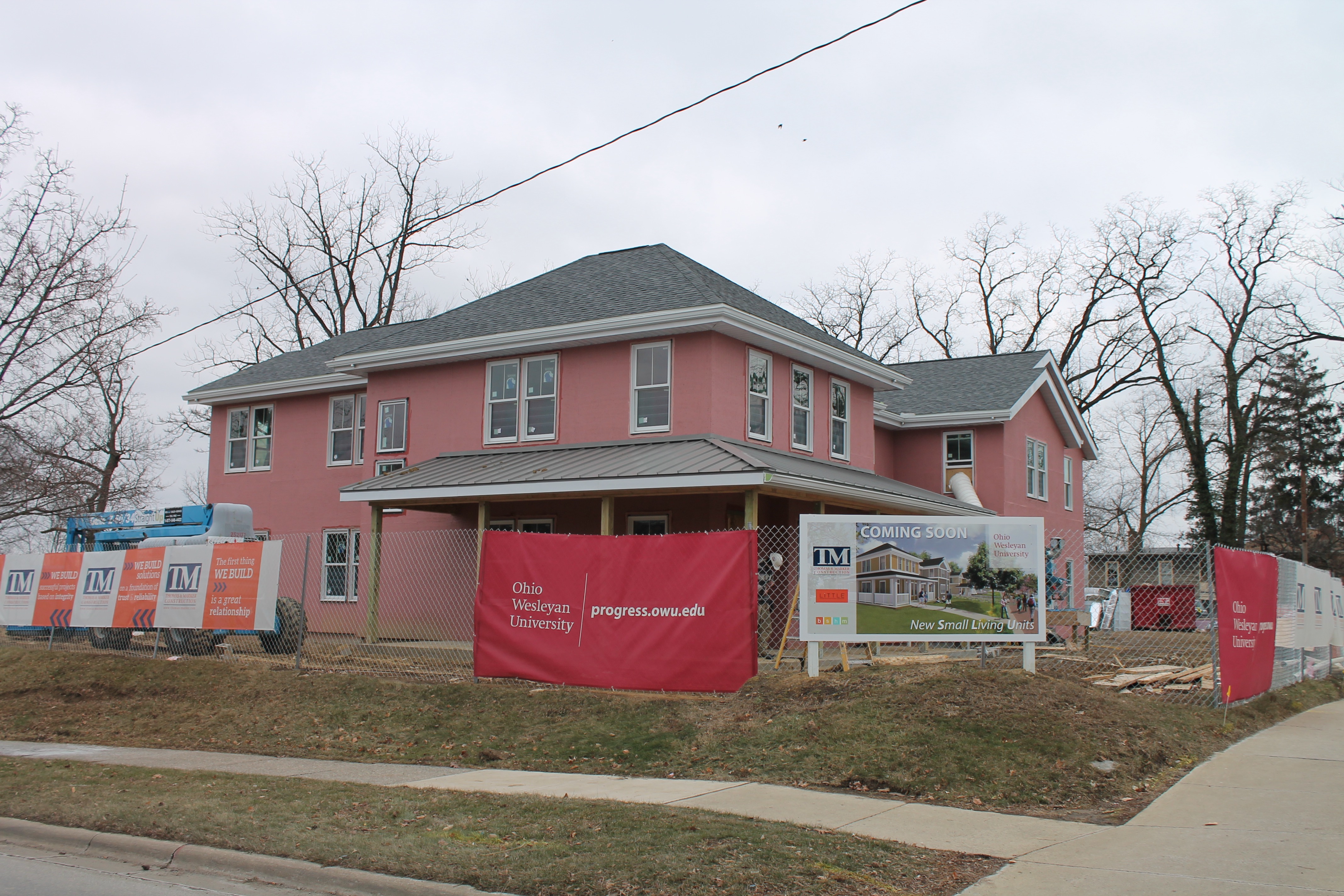
The building of new Small Living Units (SLUs) is well under way. Photo courtesy of Olivia Lease.

Liz Hardaway, Transcript Reporter

More than a hundred years later, Ohio Wesleyan’s Small Living Units (SLUs) are finally getting a makeover.

While construction of the first SLUplex continues on 118 Rowland Ave. where House of Thought (HoT) previously stood, the remaining SLUs are rotting from the inside out.

SLUs, most of which were built in 1901, encounter problems typical to any older home: propping windows open with bricks, bats occasionally finding their ways into the hallway and laying down tarps to prevent a leaking roof, according to multiple SLU members.

The basement and third floor of the House of Peace and Justice (P&J) are off-limits, however, due to lack of renovations and concerns for personal safety, according to sophomore Izzy Taylor, a member of the house.

Whether the problem is a leaky ceiling, overflowing toilet or mold creeping between the walls, each complaint is submitted through the moderator to a residential life coordinator. Buildings and Grounds then prioritize these complaints depending on the immediacy of the concern and availability of supplies, said Melinda Benson, a residential life coordinator.

“It took almost half a semester for a computer to be installed in our common room … a hole in the ceiling over my bed rotted through in mid September, and it took until sometime over winter break for it to be repaired,” said Taylor.

Occasionally students have to relocate. Benson mentioned a student with severe asthma who had to move out due to mold within the facility.

“Some of these houses are so old that the solution will be to close that house down, and move those people to one of the new facilities,” said Benson.

Currently there is one SLUplex being built, a duplex style living facility that will house two SLUs. The master plan is to eventually have four of these SLUplexes along Rowland Ave., but the project only progresses when funding is provided, said Benson. She is hoping that by next year, as the first SLUplex opens, another will be under construction.

Photo courtesy of Olivia Lease.

As most SLUs are predicted to stay in their current homes, the application process to move into a SLUplex has changed from previous applications.

SLUs will have to submit a proposal to renew and rank their preferences for facilities. Students, staff representatives and one staff member from residential life will then determine based on the merits of the presentation and application who will be the occupants of the first SLUplex, said Benson.

“I hope to see a home that is designed around the community-focused aspect of SLUs … building community and family within the SLUplex is what is most important, as is making the building accessible to all people,” said Taylor. 

WCSA’s first full senate meeting

Photo courtesy of the OWU website.

By Areena Arora, Managing Editor 

The first full senate meeting of 2016 for the Wesleyan Council on Student Affairs (WCSA) was on Jan. 18, coinciding with this year’s Martin Luther King Jr. Day.

The meeting at Crider Lounge in Hamilton-Williams Campus Center commenced with the attendees watching a part of the famous speech “I have a dream,” by Martin Luther King Jr.

“It was designed to both honor and learn from his accomplishments,” said junior Jess Choate, the WCSA President.

Choate welcomed new senators and guests to the new meeting venue in Hamwill and said the change was made to encourage more attendance by people who are not a part of WCSA.

In her report Choate introduced a new resolution to change the names of “Residential Affairs Committee” and “Campus Relations Committee” to “Student Life” and “Public Relations,” respectively. The senate will vote on the resolution at its next meeting.

Senior Caroline Anderson, secretary of WCSA, reminded senators of the attendance policy and requested attendees to refrain from using cell phones during the meeting in her report.

Sophomore Nick Melvin, chair of the Academic Affairs Committee said in his report, “We hope to solve academic problems before they arise,” adding that one of the goals for the committee this year would be to make a coherent four year plan for all incoming students.

Campus Relations Committee requested senators to get the word out for treasurer applications and appointed senator applications which are both due Friday, Jan 22.

Junior Graham Littlehale, who served as treasurer for WCSA last year, is serving as the interim treasurer until a new one is appointed.

A discussion-question portion was added at the end of the meeting as part of changes made in WCSA’s working this year.

“This is being done to provide a specific platform for senators to speak,” said Choate in response to a questions about the concerns that senators may have heard from students around campus.

Transportation to Columbus, gaps in student-faculty communication and student safety on snowy days at crosswalks were some of the concerns voiced by senators.

The meeting concluded with an announcement by Brad Ingles, the associate director for Young Alumni/Student Programs, about informational session on upcoming Board of Trustees election.

The next full senate meeting will be on Monday, Jan. 25.

OWU group braves the weather to find social justice

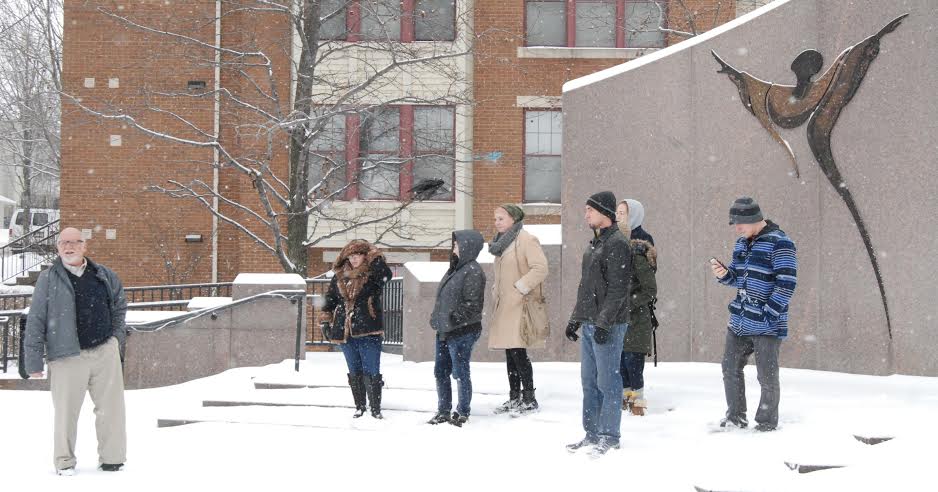
Associate Professor John Durst, left, talks to students while visiting Freedom Corner in Pittsburgh where civil rights advocates gathered in 1963 to begin their march on Washington, D.C. Photo courtesy of Olivia Lease.

John Durst limped slowly through snow, slush and rain determined that nothing was going to interrupt a trip to hilly Pittsburgh with students and faculty studying social justice issues.

At one point, Durst, associate professor of sociology at Ohio Wesleyan University, ignored doctor’s orders not to walk without the plastic, open-toe boot supporting his fractured left ankle because he wanted to keep up and, frankly, he got tired of having a wet, cold foot.

The Feb. 20-22 trip was part of the Poverty, Equity and Social Justice (PESJ) Course Connection program. Seven students and three faculty members, across a variety of disciplines including sociology, psychology, journalism, and women’s and gender studies, ventured to the traditional Rust Belt city to examine issues of racial conflict, gentrification and entrepreneurship.

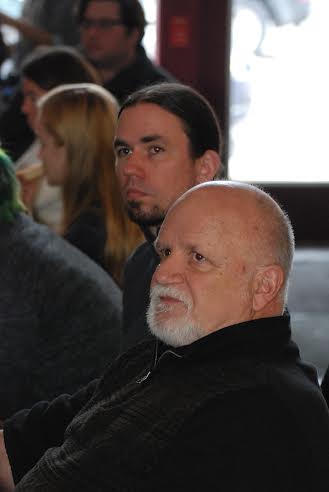
OWU professors John Durst (right) and Paul Dean, both of the Department of Sociology and Anthropology, listen to area speakers during a lunch in the Slopes neighborhood of Pittsburgh. Photo courtesy of Paul E. Kostyu.

“We wanted to offer students an opportunity to go see something,” said Durst, who is the coordinator for the PESJ course connection.

Durst also said part of the course connection’s strong suit is that it gives different faculty members a chance to get to know each other and explore difficult issues from various viewpoints.

Celeta Hickman, a co-founder of the cooperative Ujamaa Ujamaa, seemed to have the most impact on the group as she explained how her neighborhood has changed as wealthy people move in, putting pressure on rent and housing costs.

Google Inc. recently announced it was building a 200,000 square foot, six-story office building near by. And while the expansion project has been touted as an economic boost for Pittsburgh, residents and businesses at the neighborhood level worry about both the short- and long-term impact for them.

“You have to understand that we have billionaires moving here, and we don’t know what to do about that,” said Hickman, who recently found out her shop’s rent will be raised $300 a month.

“People are fighting for their opportunity to shine in the sun,” she said. “African-American women [are] banding together to make it.”

The cooperative, which is in the city’s Hill District, sells pottery, body care items, clothing, jewelry and an assortment of other items. Most vendors are of African descent.

“It was really awesome,” senior Rizz Dickson said of the trip. “I liked seeing those parts of Pittsburgh because I’ve been to Pittsburgh a lot but I’ve never had a tour of it. I liked hearing from the local people.”

Heather Fry, '99, tells course connection students about how neighborhoods, including hers, have changed, sometimes not for the good, in the last 15 years. Photo by Paul E. Kostyu.
Heather Fry, ’99, tells course connection students about how neighborhoods, including hers, have changed, sometimes not for the good, in the last 15 years. Photo by Paul E. Kostyu.

The group also met with Heather Fry, ’99, who recommended places worth visiting to Durst. She led a discussion at the Carson Street Deli in the Slopes neighborhood, within sight of downtown, but across one of the three rivers that weave through the city.

“I thought it was interesting to gain from her perspective because she went [to OWU] and she has been living in Pittsburgh for a long time,” said senior Ava Fiddle.

The group left its tracks in the snow at Freedom Corner, where “every meaningful march that has ever been” started there, Hickman said. On August 28, 1963, 2,000 people left for the March on Washington.

Celeta Hickman, co-founder of the Pittsburgh cooperative Ujamaa Ujamaa, told OWU students she worries about how small businesses like hers will survive in the Hill District as billionaires move in causing housing and rent prices to increase sharply. Photo by Paul E. Kostyu.

Other stops included the James Street Gastropub and Speakeasy, the Homewood-Brushton Center of the Community College of Allegheny County, Senator John Heinz History Center and The Andy Warhol Museum.

According to The Weather Channel, Pittsburgh received no more than one-half inch of snow while the OWU group was there, still, some places Durst planned visiting were closed.

“I think if anybody learned, I did,” said Durst in regards to the weather. He said he plans to have the trip in October next year.

“I wish we would’ve spent more time talking about solutions,” said senior Meredith Harrison. “I just felt like we saw a lot of the problems and a lot of people didn’t have answers when we were asking them about solutions.”

A grant from the Andrew W. Mellon Foundation funded the trip. The foundation, though based in New York City, was started in part by the accumulated wealth of the Mellon family of Pittsburgh.

Durst said the PESJ Course Connection will do its annual trip to Detroit in March to discuss similar issues.

Tips for a sustainable holiday

Photo by Olivia Lease

By Olivia Lease
Copy Editor

So I’m kind of passionate about the environment.

I like learning new ways to live sustainably and one surprising time we all can do that is now, during the holidays. When you think of this time, you probably picture an abundance of snow, peppermint everything and credit card debt. No? Maybe that’s just me.

No matter what you picture, here are some ways to fit Mother Earth into the grand scheme.

Gift-Giving

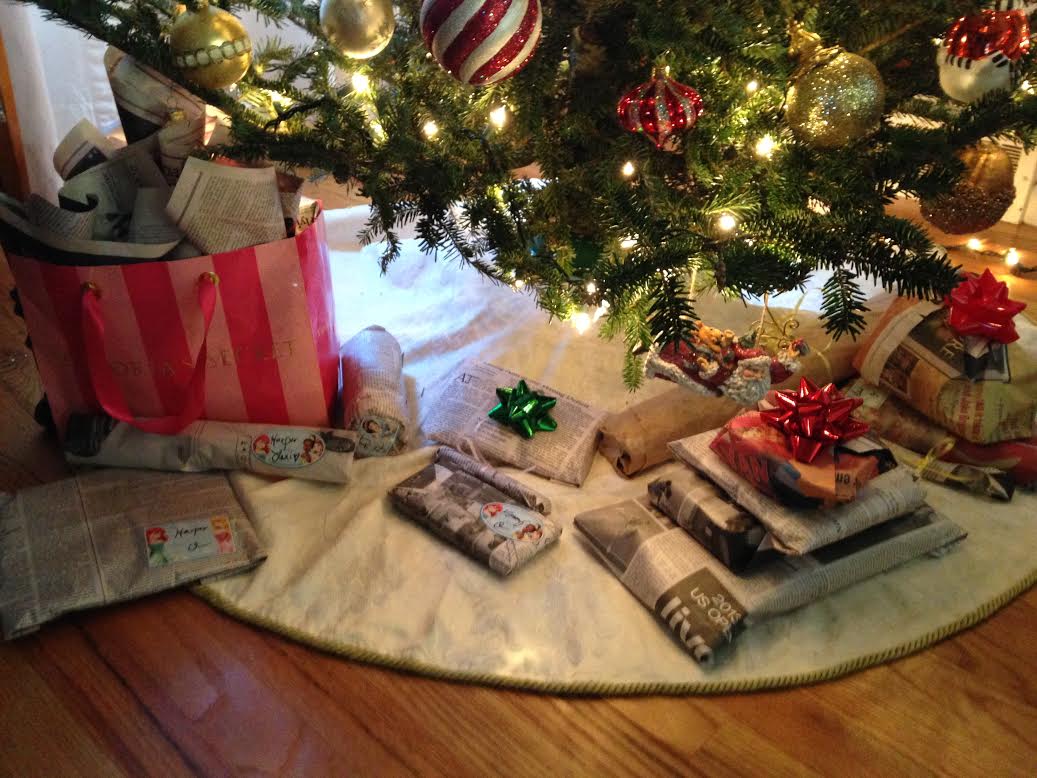
For those who give gifts, maybe use recycled paper to wrap them. I used old newspapers last year and they didn’t look too bad. Yes, a journalism major is suggesting you use the articles people work hard on to fulfill someone’s need to rip something apart. Maybe read them as you’re wrapping? Or not, that’s cool too.

Some people use maps, blueprints and even old posters, which are all great ideas. Any non-glossy wrapping paper can be shredded for compost or put in paper recycling bins. Tissue paper, boxes, bows and ribbons can all be reused.

Even the gift itself can be a bit more eco-friendly if you choose to buy local. Not only is this great for local businesses but it’s also more sustainable.  Opt for quality rather than quantity. This time of year is more about that spending time with family anyways.

Hanukkah Traditions

For those who don’t already have a menorah, buying used is good idea.  Using natural beeswax, soy, or vegetable oil candles is best.

Ordinary paraffin candles produce harmful byproducts when burned including greenhouse gases such as carbon dioxide. They are also petroleum products, meaning they’re made from oil. Make sure the wick does not have additives like zinc or lead because both release harmful gases when burned.

Also, make use of the candlelight. Use it to light a meal or simply to play games with your family. Just don’t fall asleep.

Kwanzaa Traditions

For those who celebrate Kwanzaa, the seven symbols used for celebration can all be made with sutainable materials.

For example, the Mkeka, or place mats, are typically made of straw or cloth which is already eco- friendly. The Mazao, or crops of fruits, nuts and vegetables, can be bought organically and locally. The Kinara, or candle holder, can be made from extra wood rather than bought.

Christmas Traditions

The tree is kind of a tossup in my point of view. Fake trees, despite the resources expended to make and transport them, last roughly 10 to 20 years. While I don’t think they are recyclable, you could always reuse the branches as other decorations. On the other hand, purchasing real trees often supports local businesses and depending on where you live, curbside pickup is available after the holidays to turn them into mulch. Though in the U.S. alone, 20.8 million trees are cut down for Christmas.

Decorating

For decorating, try to choose LED lighting. It saves up to 90 percent more on power costs than traditional lighting. Put lights on energy-saving timers which can be found at most hardware stores.Bringing in natural elements to decorate rather than factory-made goods can look better while being more sustainable. Twigs, burlap, and pine cones make for nice center pieces.

Food

Whether you’re celebrating a holiday or not, most can agree that the food at this time of year is amazing. Many relatives go above and beyond to create favorite meals. A lot of people also cook too much. Limiting how much is made and eating leftovers minimizes food waste. Untouched meals could also go to a local shelter. I’m not sure about other places, but the landfill for central Ohio only has about 20 years of use left to it.  By minimizing food waste we can extend the life of our landfills. Composting is always an option as well.

Parties

Hosting a party?  Put a recycle bin next to the trash can for guests to throw in their aluminum, glass and plastic. Skip disposable plates and silverware; now is the time to break out the fancy, reusable stuff. Try using cloth napkins and tablecloths as well. For afterwards, try all-natural housecleaners. Equal parts vinegar and water in a spray bottle work as a great disinfectant and deodorizer.

Traveling

Traveling is really popular at this time of year, whether it is for fun or to see distant relatives. Use public transportation or carpooling to minimize carbon dioxide emissions.